Figures

Diagrams for teaching one attribution idea at a time.

Each figure is designed to clarify a single relationship in the manuscript.

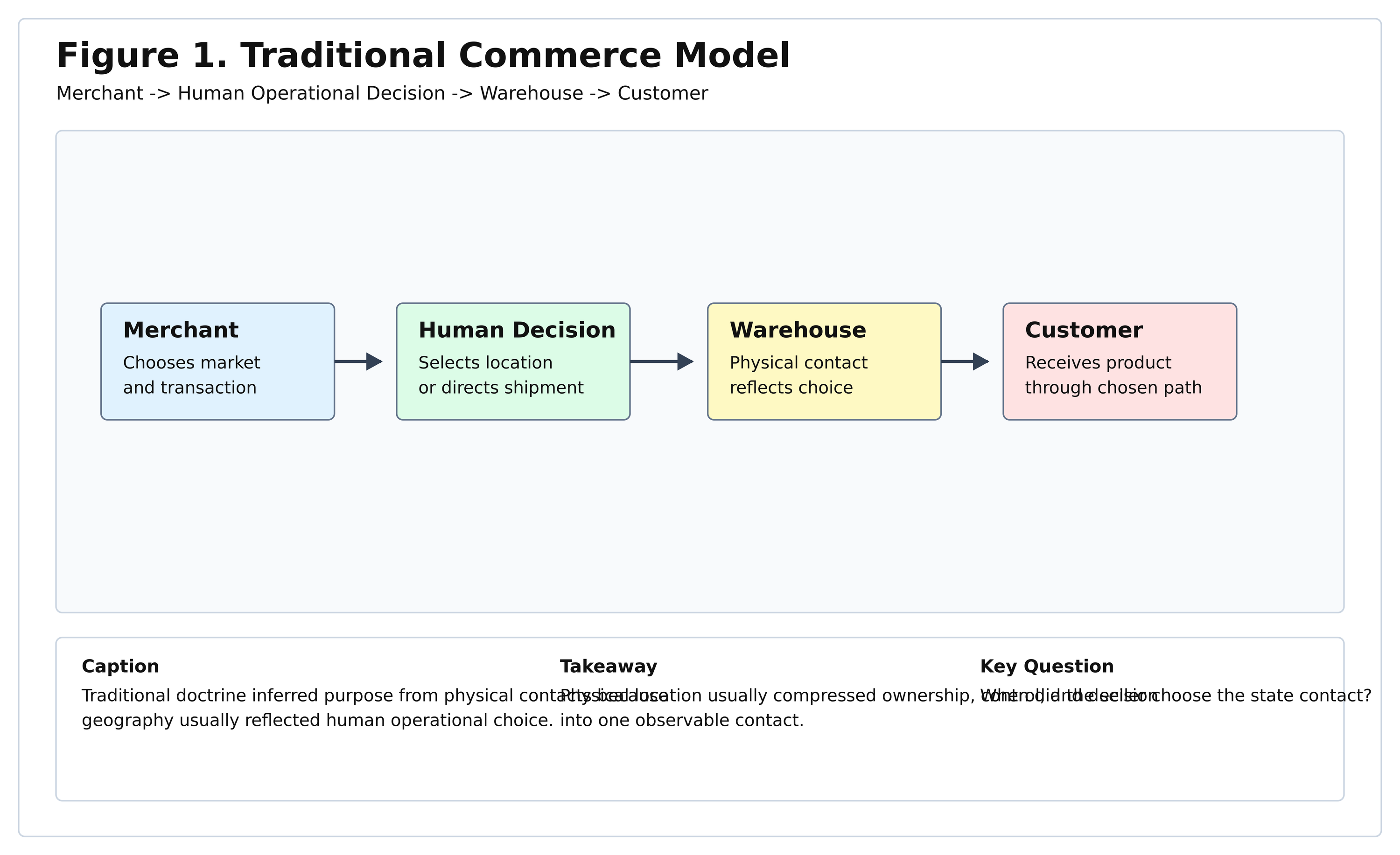
Traditional Commerce Model diagram

Traditional Commerce Model

Caption: Traditional doctrine inferred purpose from physical contacts because geography usually reflected human operational choice.

Takeaway: Physical contact once served as a strong proxy for seller-directed operational choice.

Key Question: What fact did geography historically summarize?
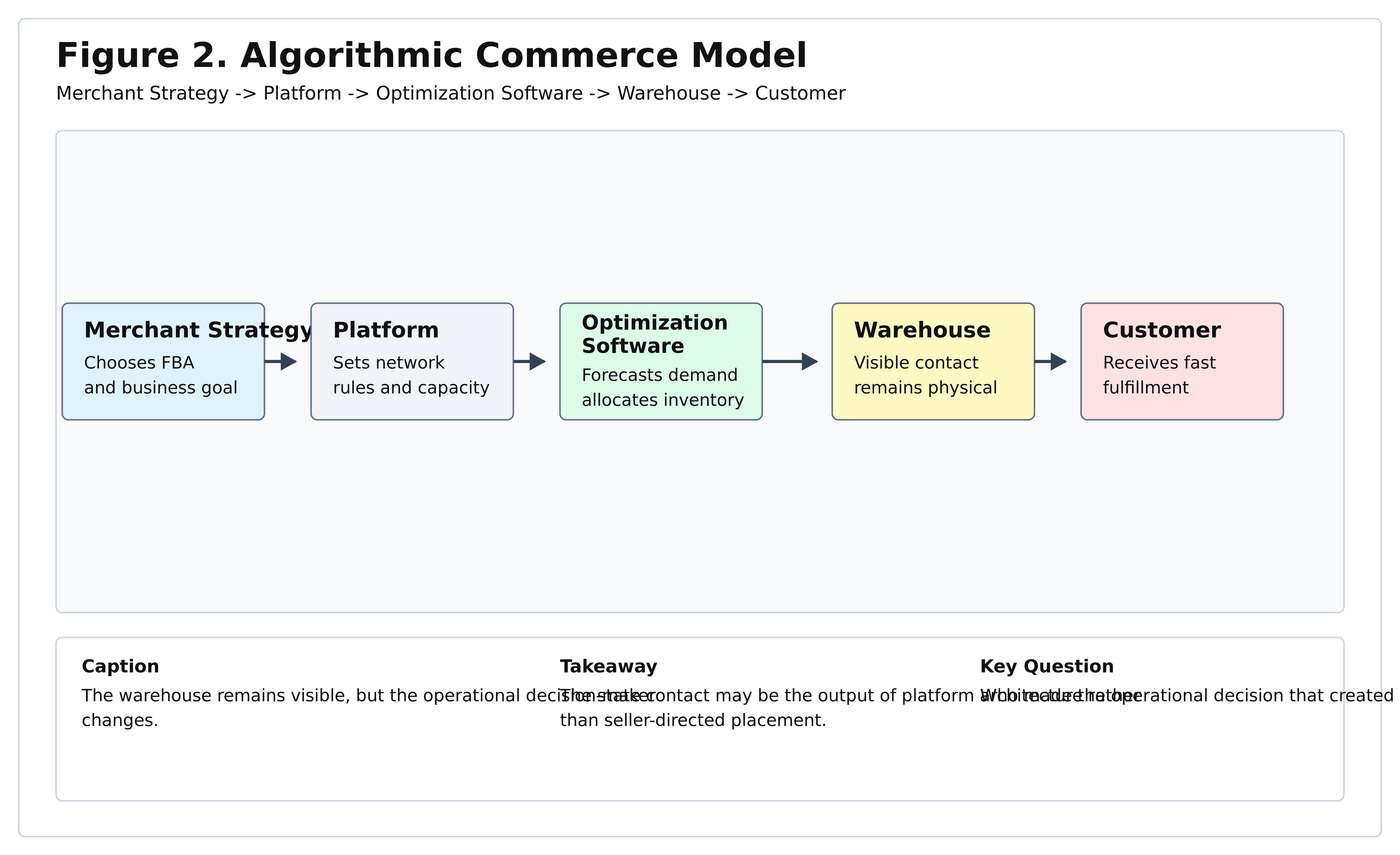
Algorithmic Commerce Model diagram

Algorithmic Commerce Model

Caption: The warehouse remains visible, but the operational decision-maker changes.

Takeaway: Platform optimization can sit between seller strategy and state contact.

Key Question: Who controlled the operational path?

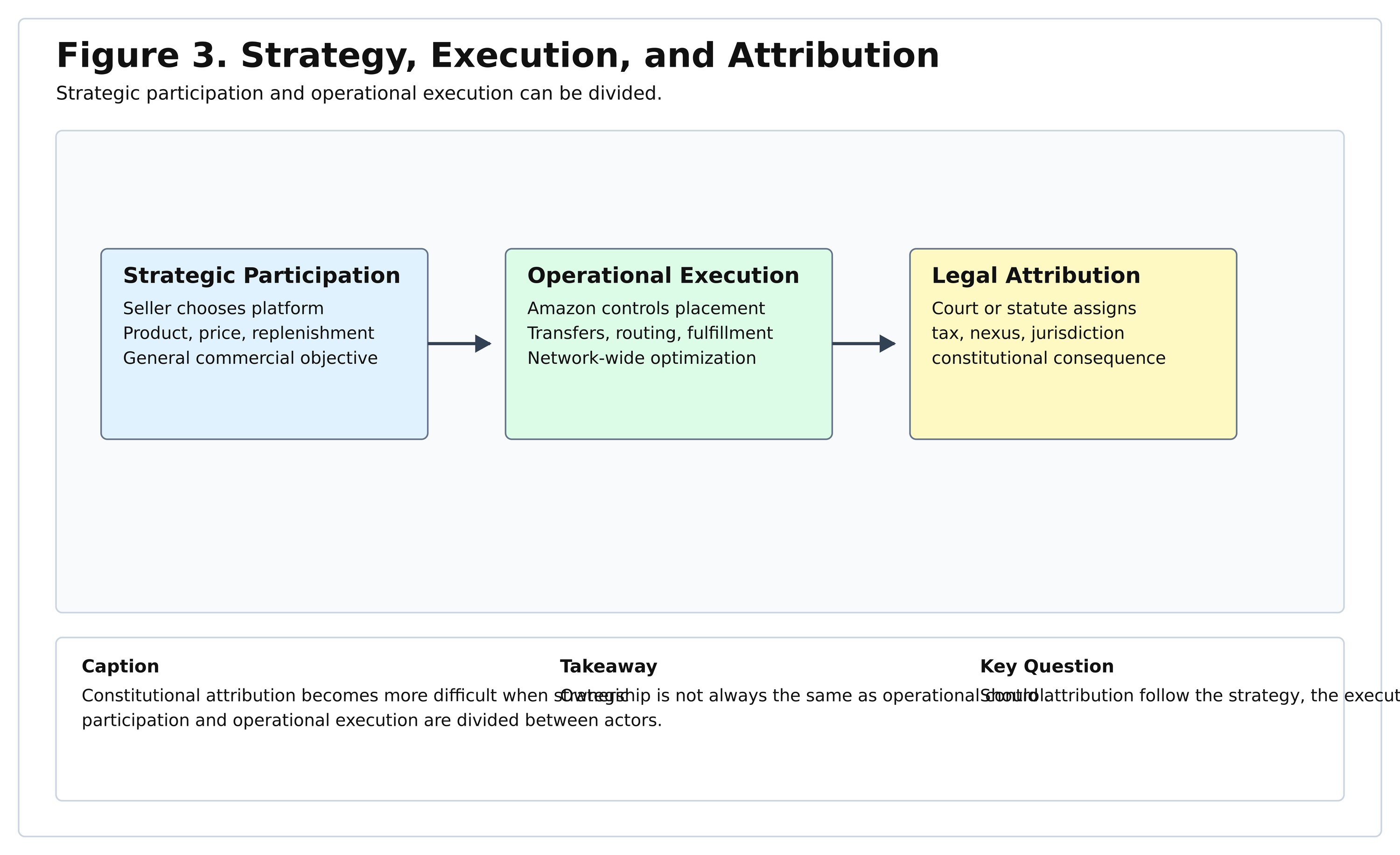
Strategy, Execution, and Attribution diagram

Strategy, Execution, and Attribution

Caption: Constitutional attribution becomes more difficult when strategic participation and operational execution are divided between different actors.

Takeaway: The seller and platform may make different kinds of legally relevant decisions.

Key Question: Should strategy and execution be attributed the same way?

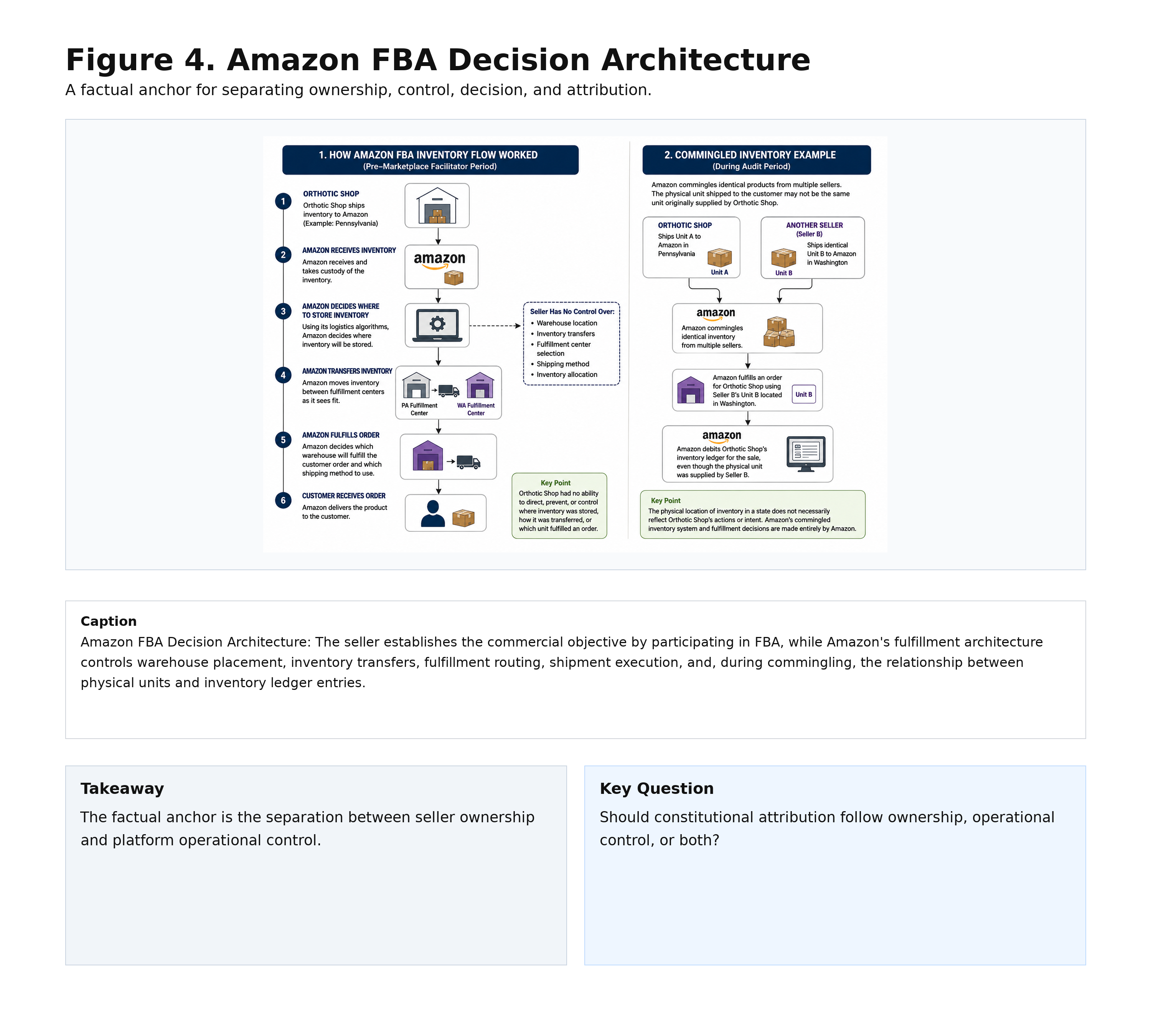
Amazon FBA Decision Architecture diagram

Amazon FBA Decision Architecture

Caption: The seller establishes the commercial objective by participating in FBA, while Amazon’s fulfillment architecture controls warehouse placement, inventory transfers, fulfillment routing, shipment execution, and, during commingling, the relationship between physical units and inventory ledger entries.

Takeaway: FBA makes the attribution question concrete.

Key Question: Where does seller choice end and platform execution begin?

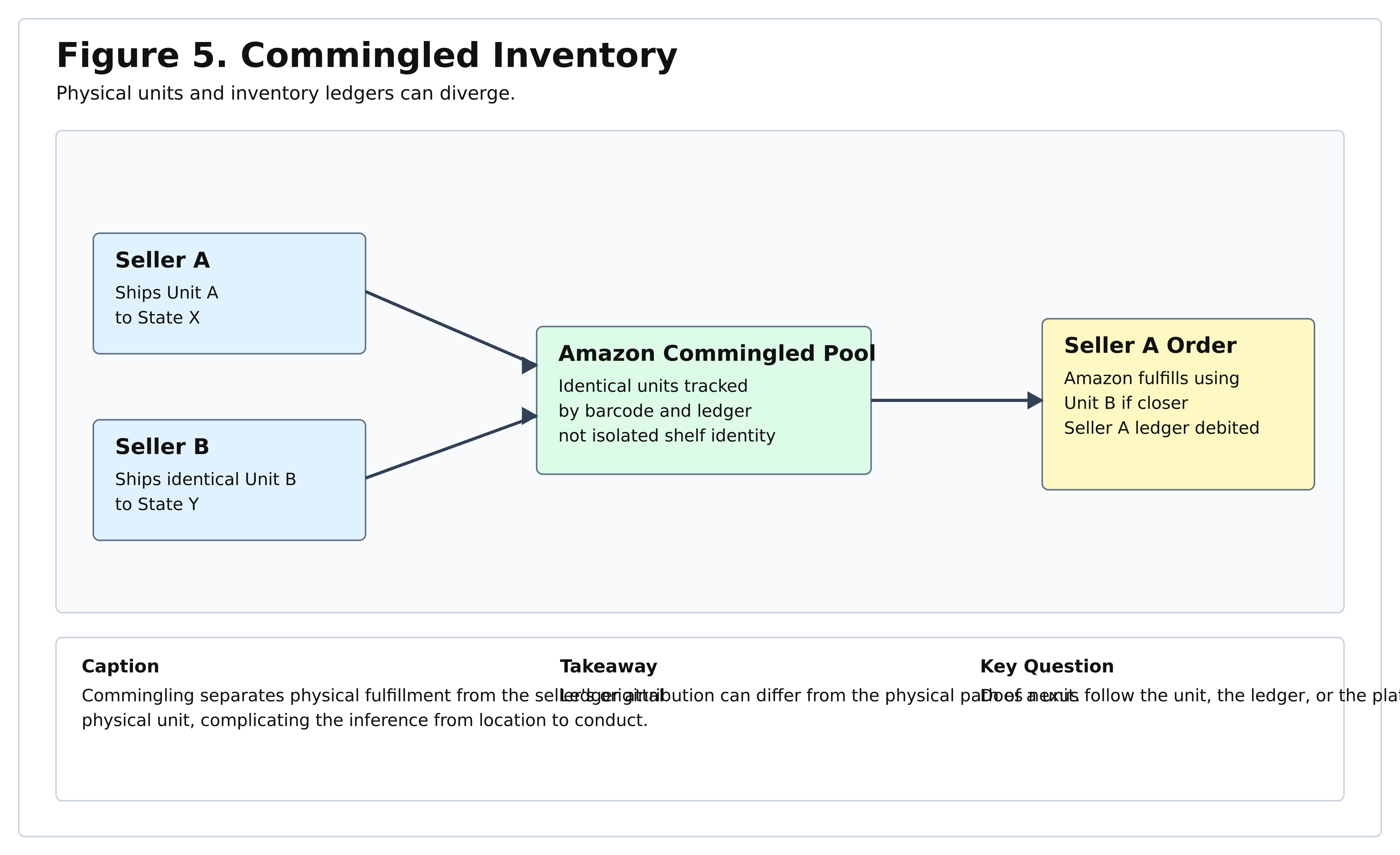
Commingled Inventory diagram

Commingled Inventory

Caption: Commingling separates physical fulfillment from the seller’s original physical unit, complicating the inference that physical location necessarily reflects seller conduct.

Takeaway: Ledger attribution and physical-unit movement may diverge.

Key Question: Does the contact follow the unit, the ledger, or the platform decision?

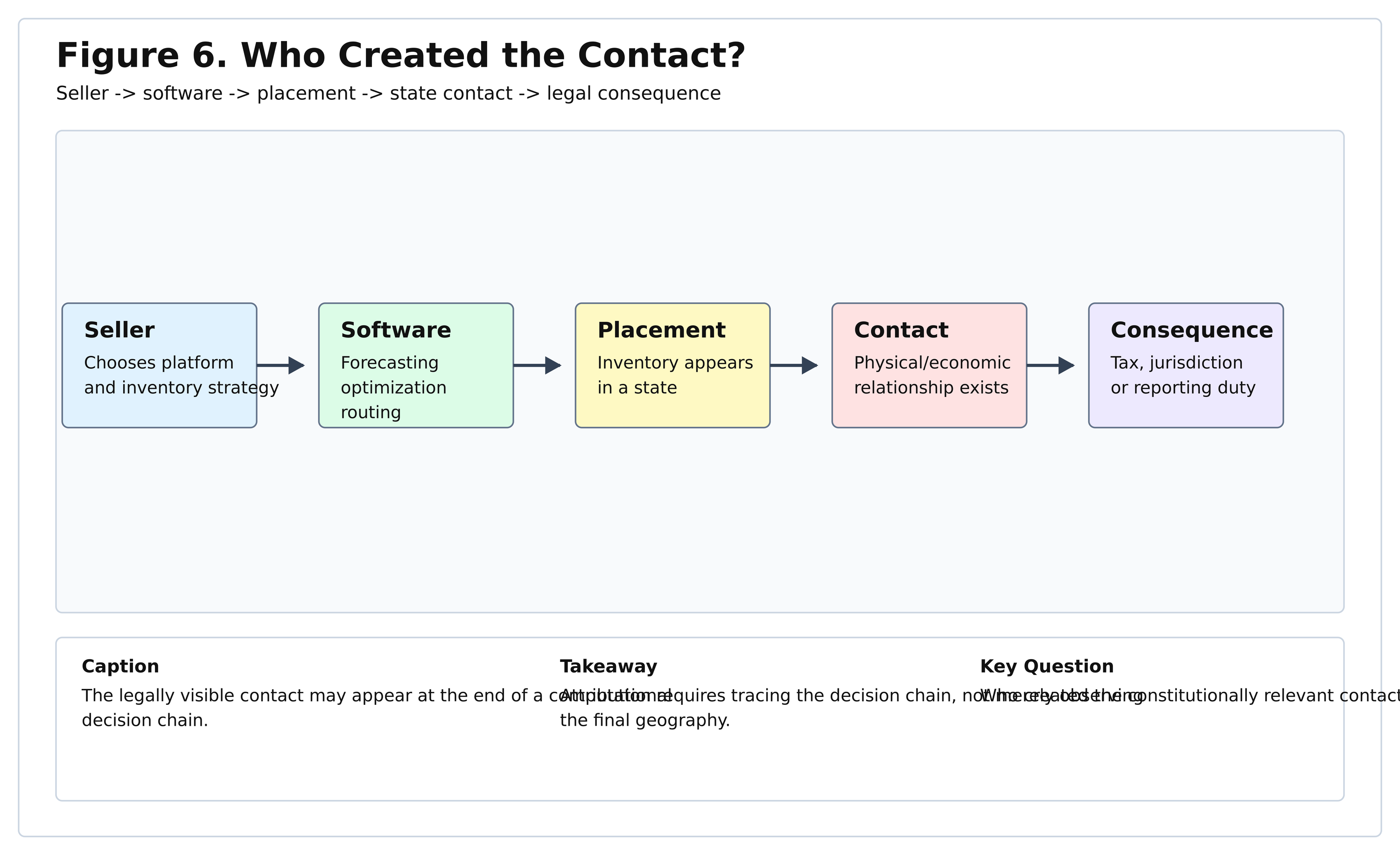
Who Created the Contact? diagram

Who Created the Contact?

Caption: The legally visible contact may appear at the end of a computational decision chain.

Takeaway: The legal question becomes harder when the operational path is hidden.

Key Question: Who created the constitutionally relevant contact?

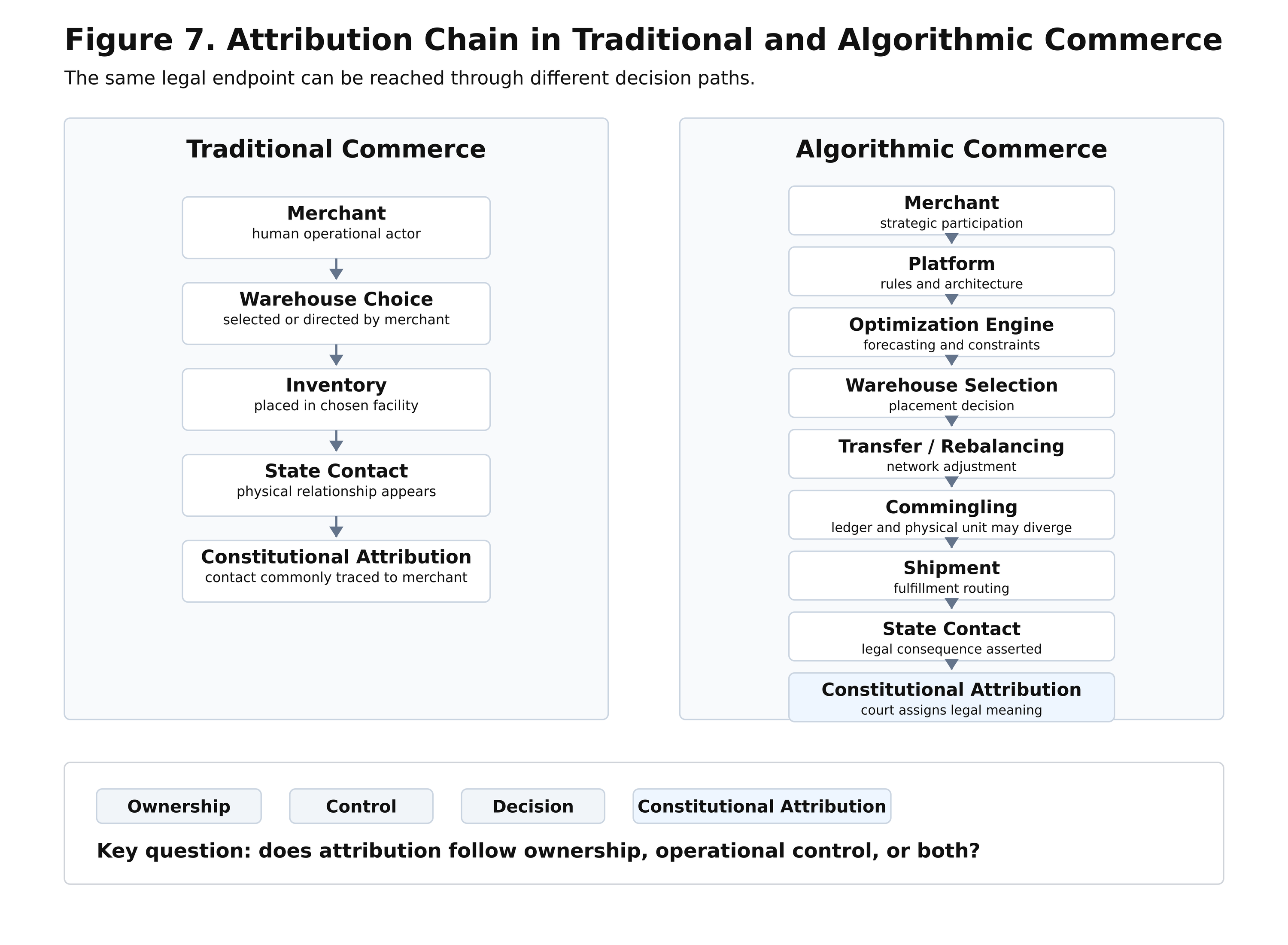
Attribution Chain in Traditional and Algorithmic Commerce diagram

Attribution Chain in Traditional and Algorithmic Commerce

Caption: Traditional commerce often linked warehouse choice and state contact through the merchant’s operational decision; algorithmic commerce can insert platform-controlled optimization, transfer, commingling, and routing between seller participation and the legally visible contact.

Takeaway: This is the project’s signature diagram.

Key Question: How should constitutional attribution respond when the decision chain changes?